Article · Hair
Nine Hair Myths Worth Unlearning, From Trims to Biotin
What dermatologists and the research say about trims, daily washing, shaving, plucking grays, brushing, dandruff, switching shampoos, inherited hair loss and biotin, and what to do instead.
9 min read1 pickHow we research
In this article
You spot a single gray hair at your part, and the tweezers are already in your hand. Then you remember what an aunt once told you: pull one out and two grow back. So you leave it there, annoyed.
A lot of hair advice travels like that, from one bathroom mirror to the next, and plenty of it doesn't survive a close look. We checked nine common beliefs against the American Academy of Dermatology (AAD), the FDA, the National Institutes of Health and published research. Some are plainly false. A couple hide a grain of truth. Where the evidence is thin, we'll say so.
"If I pluck a gray hair, more will grow back"
They won't. "There is only one hair that is able to grow per follicle," as a physician at the University of Arkansas for Medical Sciences puts it. Hair goes gray because follicles make less of the pigment melanin as we age, according to MedlinePlus, the NIH's consumer health site, and the timing is largely genetic. More grays show up over the years because more follicles slow down, not because you plucked one.
The better reason to put the tweezers away is the follicle. The same physician warns that repeated trauma to one can cause infection, scarring or bald patches. And the replacement hair comes in white anyway.
What to do: Snip a stray gray close to the root with small scissors, as he suggests. Skip supplements sold to reverse graying. MedlinePlus says they won't stop it or slow it.
"Trimming makes my hair grow faster"
Growth happens at the root, in the follicle, which MedlinePlus describes as the structure in the skin that makes and grows hair. Scissors only touch the ends. How often you cut has no effect on how fast hair leaves your scalp.
What a trim does is tidy the ends. A 2015 review of hair cosmetics notes that split ends are more likely on weathered hair, and that friction from grooming and styling adds to the problem. Cutting off frayed ends can make hair look thicker and healthier at the bottom, which is easy to mistake for growth.
What to do: Trim when your ends start to look ragged. If you're growing your hair out, protecting what you have matters more. The AAD's list of habits that damage hair includes rubbing it dry with a towel, high heat and pulling it back tightly.
"Washing my hair every day is making it fall out"
A clump of hair in the drain looks alarming, but some of that is just the day's shedding. The AAD says it's normal to shed between 50 and 100 hairs a day. Shampooing isn't on the AAD's list of 18 causes of hair loss. Coloring, perming and relaxing are, along with hairstyles that pull on the scalp.
How often you wash should follow your hair. The AAD says people with straight hair and an oily scalp may want to shampoo every day, while dry, textured, curly or thick hair can go longer, at least once every 2 to 3 weeks. A 2021 study in Asian adults found no objective harm to hair from washing more often, though three of its five authors work for Procter & Gamble, which makes shampoo.
When shedding is heavy, the AAD points to other triggers: childbirth, high fever, surgery, major weight loss, prolonged stress and stopping birth control pills, and says hair tends to regain its fullness within six to nine months.
What to do: Wash as often as your scalp needs, massaging shampoo into the scalp rather than the lengths. If you're losing far more than usual, or hair comes out in patches, see a board-certified dermatologist, who can tell excessive shedding from hair loss. Some people have both.
"Dandruff means my scalp is dry, so I should oil it"
This is the one that can backfire. Researchers link dandruff and the closely related seborrheic dermatitis to Malassezia, a yeast that lives on the skin, according to a 2015 review. The same review describes Malassezia as lipophilic, meaning drawn to oils, and says dandruff affects about half of adults worldwide.
Because the flakes look dry, people treat them as dryness. In a 2023 letter, dermatologists at the University of Alabama at Birmingham describe seborrheic dermatitis being mistaken for "dry scalp" and treated with scalp oils, a long tradition for many Black patients. In lab cultures, olive, coconut and castor oils all fed the yeast. The authors say plainly that no clinical study has tested hair oils on seborrheic dermatitis, so this is a caution, not proof. Their advice: keep oils off the scalp and on the ends of your hair.
What to do: Reach for a medicated dandruff shampoo before the oil. Vanicream Dandruff Shampoo uses 2% pyrithione zinc, is labeled for dandruff and seborrheic dermatitis, and has no fragrance or dyes, according to the bottle. Our guide How to Choose a Dandruff Shampoo by Active Ingredient covers every active. If flakes don't settle, or your scalp is red and sore, see a dermatologist, who can check for psoriasis, eczema or a fungal infection.
"Shaving makes hair grow back thicker and darker"
People have tested this for nearly a century. In a 1928 study, men shaved parts of their faces and the hairs were compared, and the researchers found no evidence that shaving sped up beard growth. In a 1970 study in the Journal of Investigative Dermatology, five young men shaved one leg every week for months and left the other alone. Scientific American, describing it, reports no significant differences in hair width, coarseness or rate of growth.
Stubble feels coarse for a simple reason. An uncut hair tapers to a fine point. A razor cuts straight across and leaves a blunt end, which can look thicker and darker as it grows out. The hair itself hasn't changed.
What to do: Shave, or don't, for your own reasons. It won't change what comes back.
"Brush 100 strokes a night for shiny hair"
The AAD doesn't hedge on this one: "Hair never needs 100 brush strokes a day. That's a myth." It goes further and warns that brushing 100 strokes a day can cause split ends.
What to do: Brush and comb only to style, gently, with a wide-tooth comb, and use conditioner to help with tangles. Timing depends on your hair. The AAD says wet hair breaks more easily, so people with straight hair should let it dry a bit first, while people with tightly curled or textured hair should comb while it's damp to reduce breakage.
"My hair gets used to a shampoo, so I have to keep switching"
We found no research showing that hair builds up a tolerance to an ordinary shampoo. There are two grains of truth in the idea, though.
The first is dandruff shampoo. The AAD notes that some people find one stops working as well as it did, and that rotating between different active ingredients may help. That's about the active and your scalp, not your hair getting bored. After weeks of a pyrithione zinc shampoo such as Vanicream's without improvement, Selsun Blue Medicated Anti-Dandruff Shampoo offers a different active, 1% selenium sulfide. It contains fragrance, dyes and menthol, so skip it if your scalp reacts to those, and check the label, since other Selsun Blue shampoos use other actives.
The second is build-up. The 2015 cosmetics review notes that some conditioning polymers collect on hair and resist being washed out. If a long-time routine starts leaving hair limp or coated, residue is the likelier explanation.
What to do: Stay with a shampoo you like for as long as it works. Focus it on the scalp, and if your hair is fine or straight, keep conditioner on the ends, as the AAD suggests.
"Hair loss comes from your mother's side"
Partly true, and that part explains why the myth stuck. Hereditary hair loss is the most common cause of hair loss worldwide, in both men and women, the AAD says. The one gene studies have confirmed is involved, called AR, sits on the X chromosome, according to MedlinePlus Genetics, and fathers can't pass X-linked traits to their sons. So a man's copy of that gene does come from his mother.
It's far from the whole picture, though. MedlinePlus says the inheritance pattern is unclear, that many genetic and environmental factors likely play a role, and that having a close relative with pattern hair loss appears to raise your risk. A 2017 study of more than 52,000 men in the UK Biobank found over 250 separate genetic regions linked to severe hair loss.
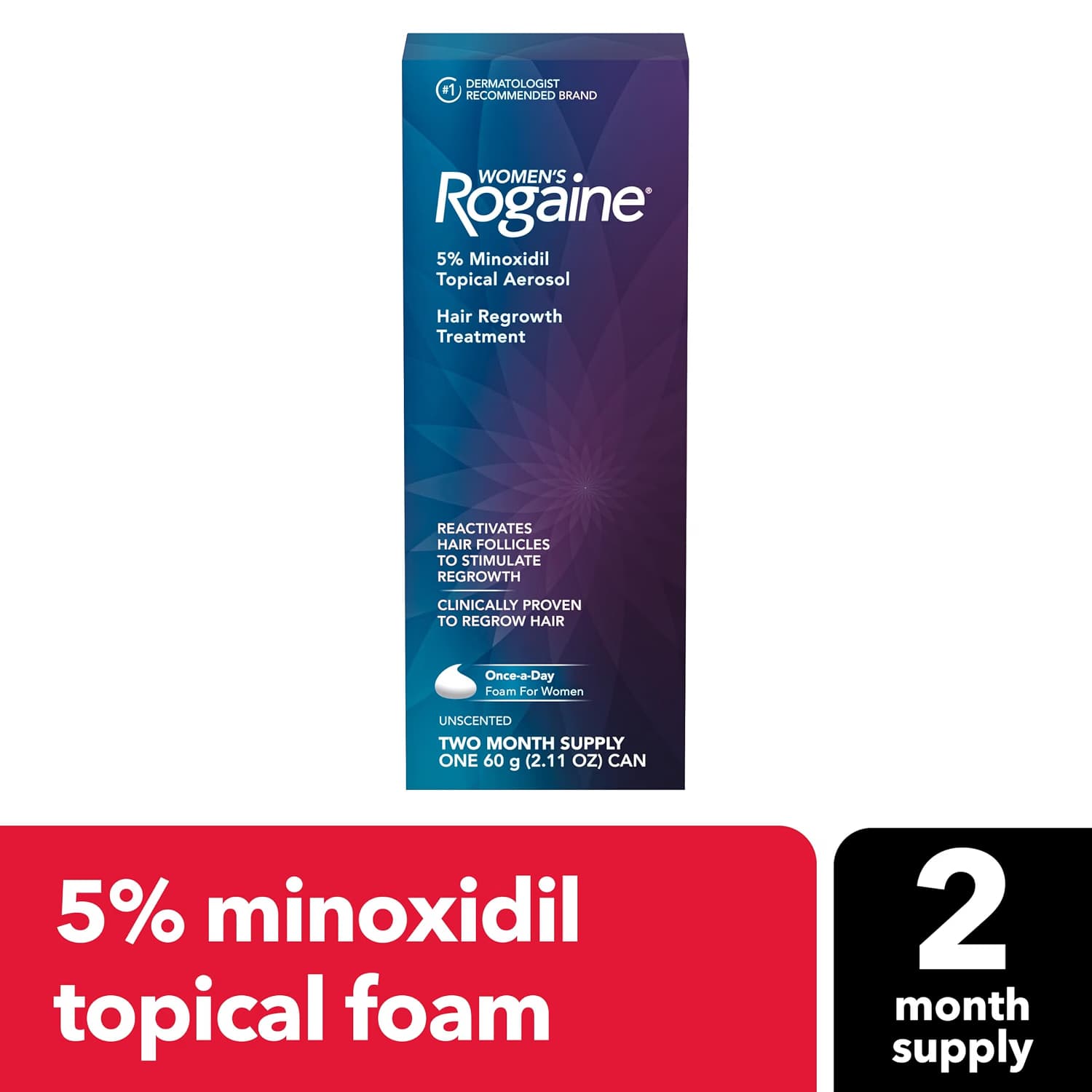
What to do: Look at both sides of the family, and act early if you notice thinning. The AAD says treatment can slow hereditary hair loss and may regrow hair, and that starting sooner works better. Minoxidil 5% foam is an FDA-approved over-the-counter drug for it: Women's Rogaine 5% Minoxidil Foam is used once a day, and Men's Rogaine 5% Minoxidil Foam twice a day on the top of the scalp (its label says it isn't for a receding hairline). Follow the label. Results take months, some women notice extra shedding in the first two to eight weeks, according to the AAD, and regrowth lasts only as long as you keep using it. Both labels say not to use it if your loss is sudden or patchy, if you don't know the cause, or if you're under 18, and that it may be harmful during pregnancy or breastfeeding. The AAD also warns that minoxidil can make pets seriously ill.
Sudden or patchy loss calls for a dermatologist, not a foam. Alopecia areata, for one, happens when the immune system attacks hair follicles.
"Biotin will make my hair grow back"
Only if you were short of it, and that's uncommon. The AAD lists too little biotin, iron, protein or zinc among the causes of hair loss, and says hair can regrow once the body gets enough. But a board-certified dermatologist quoted by the AAD in 2024 said biotin deficiency is rare and that supplements should only be taken if you have one. A 2017 review found 18 reported cases where biotin helped hair or nails, and in every one the person had an underlying problem behind their poor growth. The authors found too little evidence to support biotin in healthy people.
There's also a safety issue that has nothing to do with hair. The FDA warns that biotin in supplements can significantly interfere with certain lab tests, and it has received reports of falsely low results on troponin, a cardiac test. Supplements sold for hair, skin and nails can contain biotin, so check the label. The AAD adds that high doses can throw off hormone tests such as thyroid levels.
What to do: Don't start biotin for thinning hair without a reason. If you already take it, on its own or in a multivitamin or hair, skin and nails product, tell your doctor and the lab before any blood test.
The short version
Cutting, shaving and plucking a single hair don't change how your follicles behave. What can harm them is steady stress on the scalp: styles that pull, which the AAD says can cause permanent loss, harsh coloring, perming and relaxing, and repeated plucking. If shedding is heavy, loss is sudden or patchy, or your scalp is sore, book a board-certified dermatologist. We look at rosemary oil, another popular hair growth claim, separately.
This is general information to help you choose products, not medical advice. Skin responds differently from person to person. Patch-test new products, follow label directions, and talk to a dermatologist or doctor about skin conditions, prescription treatments, pregnancy or breastfeeding.
Products in this article
Paid links. As an Amazon Associate I earn from qualifying purchases.
Rogaine
Women's Rogaine 5% Minoxidil Foam for Hair Thinning and Loss, Topical Treatment
A 5% minoxidil foam, an FDA-approved OTC drug, that Rogaine labels for women to regrow hair on the top of the scalp, used once a day.