Article · Skincare
What Actually Works in Skin Care: The Evidence Behind Popular Ingredients
Which skin care ingredients have strong research behind them, which have some, and which are still mostly promise. A plain-English guide to the evidence and to common label claims.
9 min read2 picksHow we research

In this article
Why evidence matters
Skin care labels promise a lot. This article sorts popular ingredients by how much good research supports them, so you can judge what a product can realistically do.
How we grade: "Strong" means trials, systematic reviews and American Academy of Dermatology (AAD) guidance agree. "Moderate" means promising but small or short studies. "Limited" means mostly lab work or brand-run trials.
Most evidence: daily broad-spectrum sunscreen
- What it is: A product that filters ultraviolet (UV) light. The FDA explains that "broad spectrum" means protection from both UVA and UVB rays, and in the US sunscreens are regulated as drugs.
- What the research shows: In a randomized trial of 903 adults under 55 in Nambour, Australia, people asked to use broad-spectrum sunscreen daily showed 24% less skin aging after about 4.5 years than those who used it when they chose. Follow-up of the same community found 11 new melanomas in the daily group and 22 in the comparison group.
- What it doesn't show: Both trials come from one Australian town, and the overall melanoma difference narrowly missed statistical significance. The drop in invasive melanoma, 3 cases versus 11, was clearer.
- Who it suits: Everyone. The AAD notes that anyone can get skin cancer, whatever their skin tone, and recommends broad-spectrum, water-resistant sunscreen with SPF 30 or higher. Under FDA rules, products below SPF 15 or not broad spectrum must say they only help prevent sunburn, not skin cancer or early skin aging.
- Typical cautions: Most adults need about 1 ounce to cover the body, the AAD says, and the FDA advises reapplying at least every two hours, more often when swimming or sweating. For sensitive skin, dermatologists recommend mineral sunscreens with zinc oxide or titanium dioxide. Tinted formulas contain iron oxide, which may help with visible light, a factor in dark spots on darker skin. The FDA does not recommend sunscreen for babies under six months.
Strong evidence: retinoids
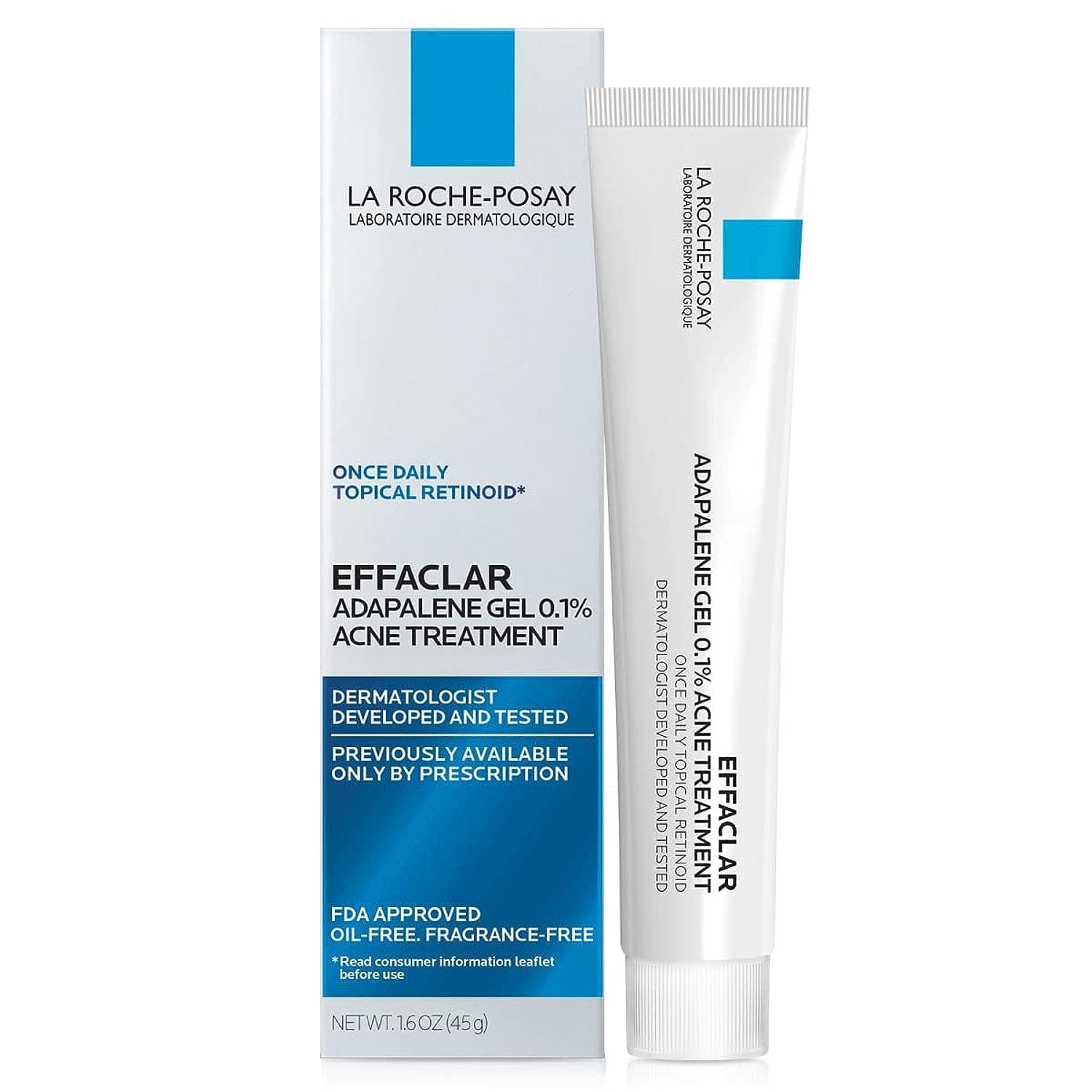
- What they are: A family that includes tretinoin (prescription only), adapalene and retinol. In 2016 the FDA approved adapalene 0.1% gel as the first retinoid sold over the counter, for acne in people 12 and older. La Roche-Posay Effaclar Adapalene Gel 0.1% is one example on Velyqora.
- What the research shows: The AAD's 2024 acne guideline gives topical retinoids a strong recommendation. For sun-related aging, one review calls tretinoin possibly the most potent and certainly the most widely studied retinoid. The AAD says retinoids can improve skin tone and reduce fine lines and wrinkles.
- What it doesn't show: Retinol is weaker. In a study comparing it with retinoic acid, retinol produced similar skin changes, but smaller ones. It is also considerably less irritating.
- Who they suit: Acne-prone skin, and people focused on fine lines, uneven tone or texture. The AAD says people with skin allergies or dry skin are probably not good candidates; with a lot of redness, ask a dermatologist about rosacea first.
- Typical cautions: The AAD says retinoids should not be used during pregnancy, and the FDA advises anyone pregnant, planning a pregnancy or breastfeeding to ask a doctor before using adapalene. The FDA notes skin may be red, dry or irritated in the first few weeks. Start every other night, apply at night and protect your skin from the sun by day. On darker skin, irritation can leave dark marks, so go slowly and moisturize. If acne hasn't improved after three months of daily adapalene, the FDA says to stop and ask a doctor.
Strong evidence: azelaic acid
- What it is: An acid used for acne, redness and dark marks. NBC Select reports that prescription versions come in 15% and 20%, and over-the-counter products go up to 10%. The Ordinary Azelaic Acid Suspension 10% is one example on Velyqora.
- What the research shows: A 2023 systematic review of 43 randomized trials found azelaic acid worked better than an inactive base for rosacea, acne and melasma, with very few differences in common side effects compared with other treatments. The AAD lists it among non-prescription acne options that can also fade the dark spots a breakout leaves behind.
- What it doesn't show: The AAD's acne guideline gives it a conditional, not strong, recommendation, and a 2020 Cochrane review found it probably works less well than benzoyl peroxide. The melasma trials used 20%, and the 2023 review found no eligible trials on skin aging.
- Who it suits: Blemish-prone skin, post-breakout marks and uneven tone. Dermatologists quoted by NBC Select describe it as milder than salicylic acid and adapalene.
- Typical cautions: Very sensitive skin may still sting or burn, and over-the-counter results can take three to four months. Dermatologists quoted by NBC Select consider it an option during pregnancy and breastfeeding; confirm with your doctor.
Strong to moderate: vitamin C (L-ascorbic acid)
- What it is: Vitamin C comes in several forms in skin care. A 2026 systematic review called L-ascorbic acid the most clinically validated.
- What the research shows: That review of 44 studies, 20 of them randomized trials, found stabilized low-pH formulas consistently improved signs of sun-related aging and pigment problems. The AAD lists vitamin C among over-the-counter ingredients for dark spots.
- What it doesn't show: Many of those studies were open label, short, small or industry-sponsored. An earlier review of seven trials with 139 volunteers called for more research and said long-term use may be needed. Formula matters too: L-ascorbic acid is hard to keep stable, and in a pig-skin study it had to be below pH 3.5 to enter the skin.
- Who it suits: People focused on dullness, dark spots or early sun-related aging whose skin tolerates acidic products.
- Typical cautions: Low-pH vitamin C may irritate. The 2026 review notes that a gentler form, tetrahexyldecyl ascorbate, is preferred for sensitive skin. Vitamin C adds no UVA or UVB protection, so use it with sunscreen, not instead of it.
Moderate evidence: niacinamide
- What it is: A B vitamin, also called nicotinamide.
- What the research shows: The AAD says niacinamide helps reduce shiny skin and acne. In a 12-week split-face trial in 50 women, 5% niacinamide reduced fine lines, dark spots, red blotchiness and sallowness compared with the same formula without it. A 2021 review found it slowed skin aging and hyperpigmentation in clinical trials.
- What it doesn't show: Trials are mostly small and short. A 2% oil-control study had mixed results, and a 2020 Cochrane review found only low-quality evidence for acne. Some popular serums use 10%, while these trials tested 2% to 5%.
- Who it suits: Oily, shiny or blemish-prone skin and uneven tone. The 2021 review describes it as well tolerated.
- Typical cautions: Dermatologists quoted by TODAY say higher strengths are more likely to cause tingling or redness, especially on sensitive skin, and suggest starting at 2% to 5%.
Moderate evidence: AHAs (alpha hydroxy acids)
- What they are: Acids such as glycolic and lactic acid, which the FDA says are the most common AHAs in cosmetics. They appear at low strengths in everyday products and at higher strengths as peels.
- What the research shows: A 2024 review describes their use for acne, hyperpigmentation and sun-related aging, and the AAD lists glycolic acid among over-the-counter ingredients for dark spots.
- What it doesn't show: That review says the best concentrations are not yet defined. The 2020 Cochrane review rated the acne evidence for glycolic acid peels as low quality.
- Who they suit: Uneven tone or dark spots on skin that tolerates acids. The AAD advises people with sensitive skin to avoid AHAs.
- Typical cautions: In FDA research, four weeks of AHA use raised sensitivity to UV reddening by 18%, an effect that reversed after stopping. The FDA's suggested label warning advises sunscreen and limited sun while using AHAs and for a week afterward. The Cosmetic Ingredient Review panel considers consumer products safe at 10% or less and pH 3.5 or higher. Burning and itching can occur. Ask a doctor about strong acids or peels during pregnancy or breastfeeding.
Limited or emerging: peptides, PDRN, snail mucin, propolis and botanicals
The AAD says anti-aging products in general deliver modest results. These ingredients have plausible ideas behind them but little strong human evidence so far.
- Peptides: The AAD describes peptides as helping skin make collagen and elastin. But in a 2026 meta-analysis, only 2 of 19 randomized trials tested peptides applied to the skin, and they showed a smaller effect on wrinkles that was not statistically significant. Most of the benefit came from oral supplements.
- PDRN: Short DNA fragments. The PDRN described in medical research comes from salmon trout or chum salmon sperm, while some skin care brands also sell plant-derived versions. Reviews focus on wound healing and recovery after in-clinic procedures such as laser resurfacing, and note few randomized trials, small samples and varied formulas. We found little evidence on PDRN serums for everyday use.
- Snail mucin: Snail secretion containing compounds such as allantoin, glycolic acid and hyaluronic acid. A 2025 review points to a lack of standardized formulas and limited clinical trials, and lists irritation, sensitization and allergic reactions as safety concerns.
- Propolis: A wax-like substance honeybees collect from plants to protect their hives. A 2017 meta-analysis called the evidence for skin use inconclusive because of low study quality and small samples. It is a known allergen: in a Swedish study, 6.2% of 722 dermatitis patients reacted to it, often alongside reactions to balsam of Peru or fragrance. Skip it if you react to bee products.
- Most botanical extracts: A 2014 review found a lack of clinical data behind botanical anti-aging claims, and a 2016 review warns of possible allergic contact dermatitis. As the AAD puts it, "all natural" in no way means hypoallergenic.
How to read common marketing terms
- "FDA approved": Cosmetics and their ingredients, apart from color additives, do not need FDA approval before sale, and companies are legally responsible for their safety. The FDA cannot approve cosmetic claims in advance, so some labels go beyond what the law allows. Sunscreens and acne treatments are over-the-counter drugs instead: they must follow FDA rules on which ingredients may be used, or be approved as a new drug, as adapalene was.
- "Hypoallergenic": The FDA says no federal standard or definition governs this term. It "means whatever a particular company wants it to mean," and companies do not have to give the FDA proof.
- "Dermatologist tested" and "clinically proven": The FDA keeps no list of approved cosmetic claims; claims must simply be truthful and not misleading. Neither phrase tells you how many people took part, for how long, or against what. On Velyqora, we attribute claims like these to the brand that makes them.
- In Canada: Health Canada classifies sunscreens as non-prescription drugs or natural health products, and every sunscreen approved for sale must carry a DIN or NPN number.
How Velyqora uses this
We give more weight to ingredients with stronger evidence, such as sunscreen, retinoids and azelaic acid, when choosing what to feature. When an ingredient's evidence is limited or emerging, we label it that way rather than repeat brand promises.
This is general information to help you choose products, not medical advice. Skin responds differently from person to person. Patch-test new products, follow label directions, and talk to a dermatologist or doctor about skin conditions, prescription treatments, pregnancy or breastfeeding.
Products in this article
Paid links. As an Amazon Associate I earn from qualifying purchases.
La Roche-Posay
La Roche-Posay Effaclar Adapalene Gel 0.1% Acne Treatment
An over-the-counter retinoid gel with 0.1% adapalene, labeled for acne in adults and children 12 and older and used once a day.
The Ordinary
The Ordinary Azelaic Acid Suspension 10%, Formula for Uneven and Blemish-Prone Skin
A cream-like suspension with 10% azelaic acid that The Ordinary makes for blemish-prone skin, uneven tone, redness and rough texture.