Buying guide · Skincare
How to Choose a Face Serum for Your Skin Concern
A plain guide to matching a face serum to one skin concern, what each active does, how strong the evidence is, and how to combine them safely.
Updated November 22, 20268 min read7 picksHow we research


In this guide
The short answer
- Best for experienced vitamin C users who want a strong, fragrance-free formula
- Timeless 20% Vitamin C + E Ferulic Acid Serum, Antioxidant, 1 fl oz
- Best for post-acne marks and visible pores
- CeraVe Resurfacing Retinol Face Serum with Niacinamide, Pore Minimizer, 1oz
- Best for oily, shiny or blemish-prone skin that wants a simple formula
- The Ordinary Niacinamide 10% + Zinc 1%, Smoothing Serum for Blemish-Prone Skin
- Best for redness and uneven tone when stronger actives feel like too much
- The Ordinary Azelaic Acid Suspension 10%, Formula for Uneven and Blemish-Prone Skin
- Best for oily or combination skin with blackheads and rough texture
- Paula's Choice SKIN PERFECTING 2% BHA Liquid Leave-On Exfoliant
- Best for a simple hydrating step for most skin types
- L'Oreal Paris Revitalift 1.5% Pure Hyaluronic Acid Serum for Face
The reasons, and who should skip each one, are below.
Who this is for
This guide is for shoppers in the US and Canada who know what bothers them about their skin but are not sure which serum fits. It sorts options by the job you want done, not by brand, and it is fine to finish it and decide you need nothing new.
What to look for
- One concern, one active. The American Academy of Dermatology (AAD) suggests focusing on one concern, and says anti-aging products in general deliver modest results. Start with whatever bothers you most.
- Strength isn't always printed. Over-the-counter retinol labels don't have to state a percentage, and neither retinol pick here does.
- Fragrance, if your skin reacts. Six of the seven picks have no fragrance in their ingredient lists. The exception is noted.
Vitamin C for dullness and dark spots
What it does: The AAD lists vitamin C among the over-the-counter ingredients to look for in products for dark spots. L-ascorbic acid is the pure form. A dermatologist quoted by Fortune notes it is also the least stable form and the one most likely to irritate sensitive skin.
How strong the evidence is: Moderate. A 2026 systematic review of 44 studies found low-pH L-ascorbic acid serums, especially those combined with vitamin E and ferulic acid, the best-supported form for signs of sun aging, with more mixed results for dark spots. Many of the studies were small, short or industry-funded.
- Best for experienced vitamin C users who want a strong, fragrance-free formula: Timeless 20% Vitamin C + E Ferulic Acid Serum. Skip it if your skin is sensitive or rosacea-prone or you have never used vitamin C; Timeless offers a 10% version as the gentler choice. Skip it too if you'd rather not refrigerate a serum and use it up within about three months of opening.
Timeless Skin Care
Timeless 20% Vitamin C + E Ferulic Acid Serum, Antioxidant, 1 fl ozEvidence: Moderate.

Retinoid for fine lines and post-acne marks
What it does: The AAD says retinol is routinely used to improve uneven skin tone, pigmentation and texture. It also says tretinoin, a prescription retinoid, reduces fine lines and wrinkles and helps with acne scars.
How strong the evidence is: Strongest for prescription tretinoin, which a 2006 review called the most widely investigated retinoid for sun-aged skin. The same review describes retinol as considerably less irritating, but over-the-counter retinol has been studied less.
- Best for post-acne marks and visible pores: CeraVe Resurfacing Retinol Serum. A nighttime retinol with niacinamide and three ceramides that CeraVe makes for post-acne skin, free of added fragrance. Skip it if you are pregnant, trying to conceive or breastfeeding, if your skin is very dry or allergy-prone, or if you avoid alcohol in skincare, because alcohol appears in its ingredient list.
CeraVe
CeraVe Resurfacing Retinol Face Serum with Niacinamide, Pore Minimizer, 1ozEvidence: Moderate for marks and uneven tone, limited for pores.
- Best for fine lines, with added hydrators: La Roche-Posay Retinol B3 Serum. It pairs retinol with niacinamide, glycerin and sodium hyaluronate, and La Roche-Posay positions it for sensitive skin. Skip it if you are pregnant, trying to conceive or breastfeeding, or if fragrance or alcohol bothers your skin: it is lightly fragranced and contains denatured alcohol.
Niacinamide for oil and pores
What it does: Niacinamide is a form of vitamin B3. In a 2006 trial, a 2% niacinamide moisturizer lowered facial oil in some groups. A 2021 review cites clinical trials in which it slowed skin aging and uneven pigmentation, and calls it well tolerated.
How strong the evidence is: Modest. The oil study used 2%, not 10%, and a 2020 Cochrane review rated most of the acne evidence for this group of ingredients as low or very low quality.
- Best for oily, shiny or blemish-prone skin that wants a simple formula: The Ordinary Niacinamide 10% + Zinc 1%. A short, water-based formula with zinc PCA and no fragrance in its ingredient list. Skip it if you have sensitive skin or have never used niacinamide, or if your morning routine centers on vitamin C, because The Ordinary says not to use the two together.
The Ordinary
The Ordinary Niacinamide 10% + Zinc 1%, Smoothing Serum for Blemish-Prone SkinEvidence: Moderate.

Azelaic acid for redness and uneven tone
What it does: The AAD lists azelaic acid among non-prescription acne options and says it can also fade the dark spots left when a breakout clears. The Ordinary aims its suspension at uneven tone and the look of redness.
How strong the evidence is: Moderate, and indirect for a 10% product. A 2023 systematic review of 43 randomized trials found azelaic acid worked better than an inactive cream for acne, rosacea and melasma, and the AAD's 2024 acne guideline recommends it, with a conditional rating, while a 2020 Cochrane review found it probably works less well than benzoyl peroxide for acne. Most of those trials used prescription strengths of 15% or 20%.
- Best for redness and uneven tone when stronger actives feel like too much: The Ordinary Azelaic Acid Suspension 10%. A cream-like treatment with one active and no fragrance in its ingredient list. Dermatologists quoted by NBC Select describe azelaic acid as milder than salicylic acid and adapalene. Skip it if you want the strongest option for diagnosed rosacea or persistent acne (ask a dermatologist), or if your routine relies on retinoids, exfoliating acids or vitamin C and you'd rather not rearrange it. Very sensitive skin can still sting, so patch-test first.
The Ordinary
The Ordinary Azelaic Acid Suspension 10%, Formula for Uneven and Blemish-Prone SkinEvidence: Moderate.

BHA for blackheads and clogged pores
What it does: BHA in skincare is usually salicylic acid, the BHA the FDA says is most used in cosmetics. The AAD says it works best on whiteheads and blackheads because it unclogs pores and exfoliates the skin.
How strong the evidence is: Limited. The AAD's 2024 acne guideline gives salicylic acid a conditional recommendation, and the 2020 Cochrane review rated its trial evidence in acne as low or very low quality.
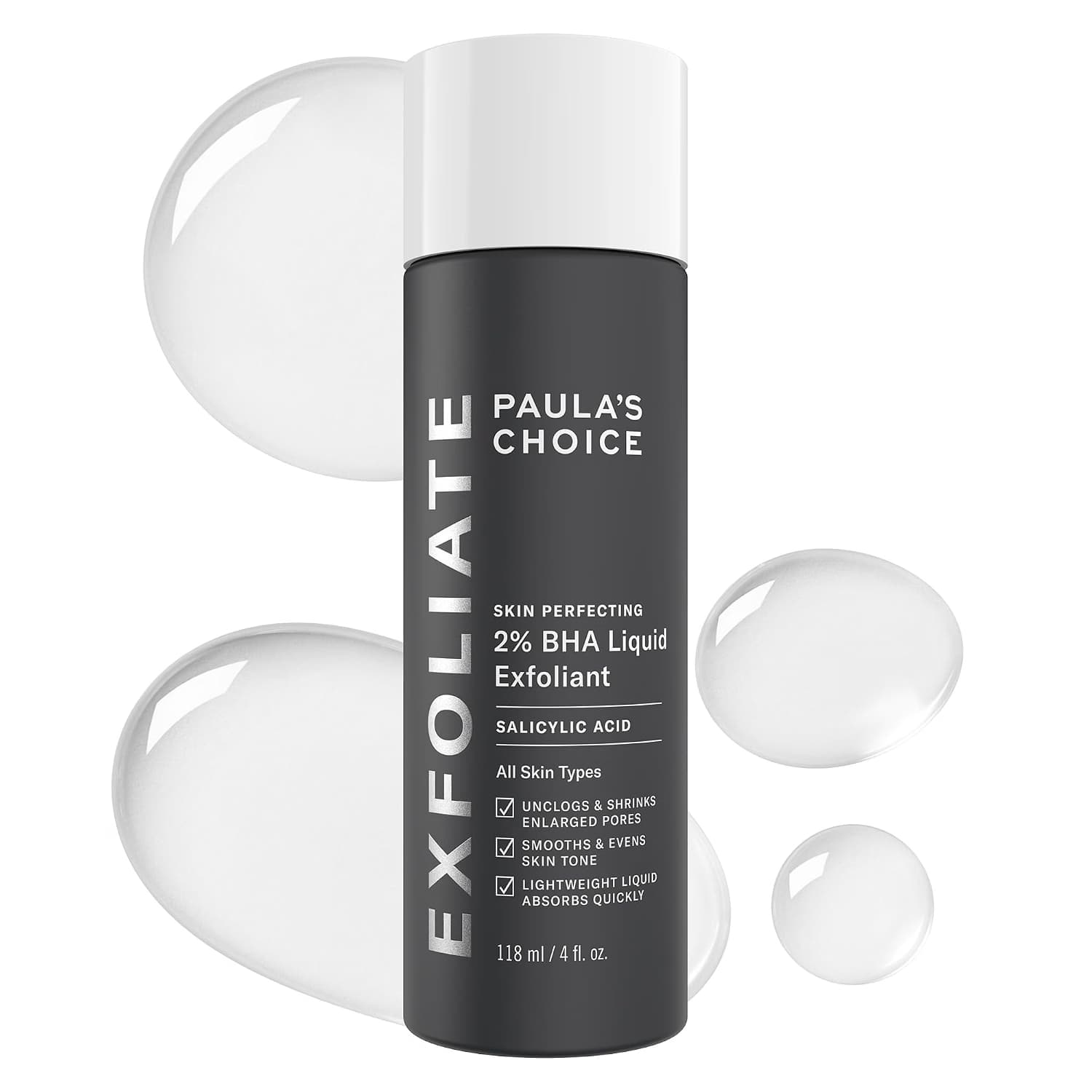
- Best for oily or combination skin with blackheads and rough texture: Paula's Choice Skin Perfecting 2% BHA Liquid Exfoliant. A fragrance-free, leave-on liquid with 2% salicylic acid. Skip it if you have rosacea (the AAD advises people with rosacea to stop exfoliating), very dry or sensitive skin, a darker skin tone that tends to mark after irritation, or a salicylate or aspirin allergy.
Paula's Choice
Paula's Choice SKIN PERFECTING 2% BHA Liquid Leave-On ExfoliantEvidence: Moderate for salicylic acid on clogged pores and blackheads, limited for the brand's pore and blackhead results.
Hyaluronic acid for dehydration
What it does: The AAD describes hyaluronic acid as an ingredient that helps lock in water to keep skin hydrated, and as a lightweight option for oily or acne-prone skin.
How strong the evidence is: Good for its main job, hydration. Treat wrinkle claims on a hydrating serum as brand claims; the AAD says anti-aging products in general give modest results.
- Best for a simple hydrating step for most skin types: L'Oreal Paris Revitalift 1.5% Pure Hyaluronic Acid Serum. Fragrance-free, with hyaluronic acid in more than one molecular size, and L'Oreal says it suits all skin types, including sensitive. Skip it if you expect it to change deeper wrinkles or sagging, or if your moisturizer already keeps your skin comfortable. In Canada, L'Oreal sells a version called Triple Power LZR, so check the label.
How to combine them safely
- Start one active at a time. A dermatologist quoted by the AAD says it is always best to introduce one new product at a time to make sure your skin can tolerate it. For strong actives like retinoids or acids, The Ordinary suggests starting two to three times a week.
- Patch-test first. The AAD suggests applying a new product to a quarter-sized spot, such as the underside of your arm, twice a day for 7 to 10 days. If a reaction appears, wash it off and don't use it again.
- Vitamin C in the morning, retinoids at night. That is The Ordinary's recommendation, and it keeps retinoids away from daytime sun, as the AAD advises.
- Respect The Ordinary's conflicts. The Ordinary says not to use its niacinamide serum with direct or indirect vitamin C, or its azelaic acid suspension with direct acids, direct vitamin C, retinoids or peptides. Keep these in separate routines.
- Keep BHA apart, too. Dermatologists quoted by NBC Select suggest using salicylic acid at a different time or on different days from retinoids, and not at the same time as vitamin C.
- Daily sunscreen is the most important step. An AAD dermatologist recommends a broad-spectrum, water-resistant sunscreen with SPF 30 or higher every day. Vitamin C is not a substitute: dermatologists quoted by NBC Select note it doesn't add UVA or UVB protection.
- Pregnancy and breastfeeding. The AAD says retinoids should not be used during pregnancy, and La Roche-Posay advises avoiding retinol while pregnant or breastfeeding. Paula's Choice says 1-2% BHA is generally considered safe in pregnancy but to ask your provider first. Dermatologists quoted by NBC Select consider azelaic acid suitable. Check with your doctor before starting any active.
Common mistakes
- Pushing through stinging. The AAD says to stop a product that burns or stings, and notes that irritation can itself cause dark spots.
- Over-exfoliating. The AAD warns that too much exfoliation can leave skin red and irritated.
- Using vitamin C past its prime. Timeless says its serum is clear to pale yellow when fresh; dark orange or brown means it has likely oxidized.
- Skipping sunscreen. The AAD calls it essential for fading dark spots, and the FDA advises sun protection with BHA.
FAQ
Can I use vitamin C and retinol together?
Yes, at different times of day: vitamin C in the morning, under sunscreen, and the retinoid at night.
How long before I see a difference?
It depends on the active. Dermatologists quoted by NBC Select say over-the-counter azelaic acid can take about three to four months. For dark spots, the AAD says a mark a few shades darker than your skin usually fades within 6 to 12 months.
Is a higher percentage always better?
No. A dermatologist quoted by Prevention says 10% to 20% vitamin C works without being overly irritating, and dermatologists quoted by TODAY say higher-strength niacinamide is more likely to cause tingling or redness, so they suggest starting lower if you are new or sensitive.
This is general information to help you choose products, not medical advice. Skin responds differently from person to person. Patch-test new products, follow label directions, and talk to a dermatologist or doctor about skin conditions, prescription treatments, pregnancy or breastfeeding.
Products in this guide
Paid links. As an Amazon Associate I earn from qualifying purchases.
CeraVe
CeraVe Resurfacing Retinol Face Serum with Niacinamide, Pore Minimizer, 1oz
A nighttime retinol serum with niacinamide and three ceramides, free of added fragrance, that CeraVe makes for post-acne marks and pores.
L'Oréal Paris
L'Oreal Paris Revitalift 1.5% Pure Hyaluronic Acid Serum for Face
A fragrance-free hyaluronic acid serum from L'Oreal Paris, made for all skin types and used morning and night for hydration and plumper-looking skin.
La Roche-Posay
La Roche-Posay Retinol Face Serum with Niacinamide & Hyaluronic Acid, 1oz
A nighttime retinol serum with niacinamide from La Roche-Posay, positioned for sensitive skin but lightly fragranced, for fine lines and wrinkles.
Paula's Choice
Paula's Choice SKIN PERFECTING 2% BHA Liquid Leave-On Exfoliant
A leave-on liquid exfoliant with 2% salicylic acid that Paula's Choice makes for clogged pores, blackheads and uneven texture.
The Ordinary
The Ordinary Azelaic Acid Suspension 10%, Formula for Uneven and Blemish-Prone Skin
A cream-like suspension with 10% azelaic acid that The Ordinary makes for blemish-prone skin, uneven tone, redness and rough texture.
The Ordinary
The Ordinary Niacinamide 10% + Zinc 1%, Smoothing Serum for Blemish-Prone Skin
A water-based serum with 10% niacinamide and zinc PCA that The Ordinary makes for visible shine, pores and blemish-prone skin.
Timeless Skin Care
Timeless 20% Vitamin C + E Ferulic Acid Serum, Antioxidant, 1 fl oz
A water-based serum with 20% L-ascorbic acid, vitamin E and ferulic acid that Timeless makes for brightness and a more even tone.