Article · Skincare
Sun Spots and Dark Marks: What Actually Fades Them
Why dark spots form, why daily sunscreen comes first, and how strong the evidence is for the ingredients most often sold to fade them, with realistic timelines and when to see a dermatologist.
14 min read6 picksHow we research



In this article
The short answer
The reasons, and who should skip each one, are below.
Why dark spots are worth understanding first
Dark spots happen on every skin tone, but they don't all have the same cause, and the cause decides what is likely to help. This article explains the three most common kinds, why daily sunscreen comes before any serum, and how much research supports the ingredients most often sold to fade them. The goal throughout is fading the look of spots and evening out tone, not changing your natural skin color.
How we grade: "Strong" means an over-the-counter drug used as labeled, or several well-run human trials that agree. "Moderate" means some human trials point the same way, but they are small, short or not on the exact strength sold in stores. "Limited" means one small study, lab research or research on a related ingredient. "Brand claims only" means we found no published research behind a benefit.
Three common kinds of dark marks
- Sun spots (solar lentigines): Flat brown spots that the American Academy of Dermatology (AAD) says appear where the sun's rays often hit, such as the face and hands. They are also called age spots or liver spots. The AAD notes they can come back after treatment, and that sun protection helps prevent this.
- Marks left after acne (post-inflammatory hyperpigmentation): Flat spots that stay after a pimple clears. On lighter skin they are usually red or pink; on medium and darker skin they are often brown and can look bluish gray. The AAD says they are not scars and usually fade over time. The same kind of mark can follow bug bites, cuts, burns or irritating products. A 2010 review found these marks affect people with darker skin more often and more severely.
- Melasma: Blotchy patches and freckle-like spots on sun-exposed skin, mostly the face. The AAD says it is much more common in women, especially between 20 and 40, and in people with medium or dark skin tones. Triggers include sunlight, hormones (as in pregnancy), birth control pills, some medicines and tanning beds. It may fade after a baby is born or a medicine is stopped, but it can also last for years. The AAD notes that melasma does not harm your body.
First, check whether a spot needs a dermatologist
Not every dark spot is harmless, and fading products can hide a problem. The AAD warns that treating a skin cancer as an age spot can give the cancer time to grow and possibly spread. Make an appointment with a board-certified dermatologist if you notice:
- A new spot, a spot that looks different from your others, or one that changes, itches or bleeds. The AAD's ABCDE signs of melanoma are Asymmetry, an irregular Border, uneven Color, a Diameter usually larger than a pencil eraser (though melanoma can be smaller), and Evolving, meaning any change in size, shape or color.
- A dark spot on your palms, soles or nails, or a dark streak in a nail. The AAD says that on darker skin, skin cancer may appear in places that get little sun, and that a growing dark spot on a palm or sole can be a sign of melanoma.
- Patchy uneven color on your face. A dermatologist can confirm whether it is melasma or something else, and can offer prescription options.
- Marks that haven't faded with careful over-the-counter care. The AAD says some spots need prescription-strength treatment and that a dermatologist can safely combine treatments.
- Dark spots that began after starting a medicine. The AAD advises not stopping a prescribed medicine on your own; ask the doctor who prescribed it.
- You are pregnant or breastfeeding. Some fading ingredients, including retinoids, are not advised during pregnancy (see below).
The foundation: daily broad-spectrum sunscreen
Grade: Strong. Sunscreens are over-the-counter drugs in the US, and the FDA explains that "broad spectrum" means protection from both UVA and UVB rays. The AAD says sunlight makes skin produce more pigment, which can darken melasma and cause new patches, and that sunscreen helps prevent age spots. Without daily sun protection, any progress from a serum can be undone.
- What to look for: The AAD recommends broad-spectrum sunscreen with SPF 30 or higher that is water resistant, reapplied every two hours and after swimming or sweating. It also suggests a wide-brimmed hat and avoiding the outdoors from 10 a.m. to 2 p.m. when you can.
- Why a tint can help: The AAD says visible light can worsen dark spots and melasma, especially on darker skin, and recommends a tinted sunscreen with iron oxide in a shade that blends with your skin. Iron oxide is listed under inactive ingredients, so check the full label. The evidence for the tint is **Moderate**: in a 2014 randomized trial of 68 people with melasma who were all using hydroquinone, those given an iron-oxide sunscreen improved more than those using a UV-only sunscreen.
- On Velyqora: La Roche-Posay Anthelios Mineral Tinted SPF 50 uses titanium dioxide as its only active and iron oxides for its tint. It comes in one tint, so check it against your skin before relying on it every day.
- Skip tanning beds: The AAD says indoor tanning can worsen melasma and stop treatment from working.
Ingredients that may help fade dark spots, graded
The AAD lists azelaic acid, glycolic acid, kojic acid, vitamin C and retinoids among the over-the-counter ingredients to look for. Glycolic acid, an AHA, is covered in our article What Actually Works in Skin Care; the FDA advises sunscreen while using AHAs and for a week afterward. Serums sold as "brightening" are cosmetics, and the FDA notes that cosmetics do not need FDA approval before sale.
Retinoids: strong for prescription tretinoin, less for store-bought forms
- What they are: A family that includes tretinoin (prescription only), adapalene (sold over the counter at 0.1% since the FDA approved the switch in 2016) and retinol.
- What the research shows: In a 10-month trial, sun spots on the face faded in 83% of people using 0.1% tretinoin, compared with 29% using a cream without it, and the spots had not returned six months after stopping. In a 40-week trial in Black patients, tretinoin made marks left by skin inflammation significantly lighter than a plain cream. A similar trial in Black patients with melasma found a 32% improvement in severity scores with tretinoin, against about 10% without it. For adapalene, one 9-month trial found sun spots looked lighter in 57% of people using the 0.1% gel, compared with 36% using a plain gel.
- Grades: Strong for prescription tretinoin. Moderate for adapalene, which has one trial for sun spots and is labeled for acne, not dark spots. Limited for retinol: the AAD says it is used for uneven tone, but a comparison study found its skin changes are similar to tretinoin's and smaller.
- Cautions: Irritation was common in the trials: about half the people in the post-acne trial, and two-thirds in the melasma trial, developed a mild retinoid rash. The AAD notes that irritation can itself cause dark marks on darker skin, so start every other night, use a moisturizer and build up slowly. Retinoids can make skin more sensitive to the sun, so use them at night. The AAD says retinoids should not be used during pregnancy, and the FDA advises asking a doctor before using adapalene if you are pregnant, planning a pregnancy or breastfeeding.
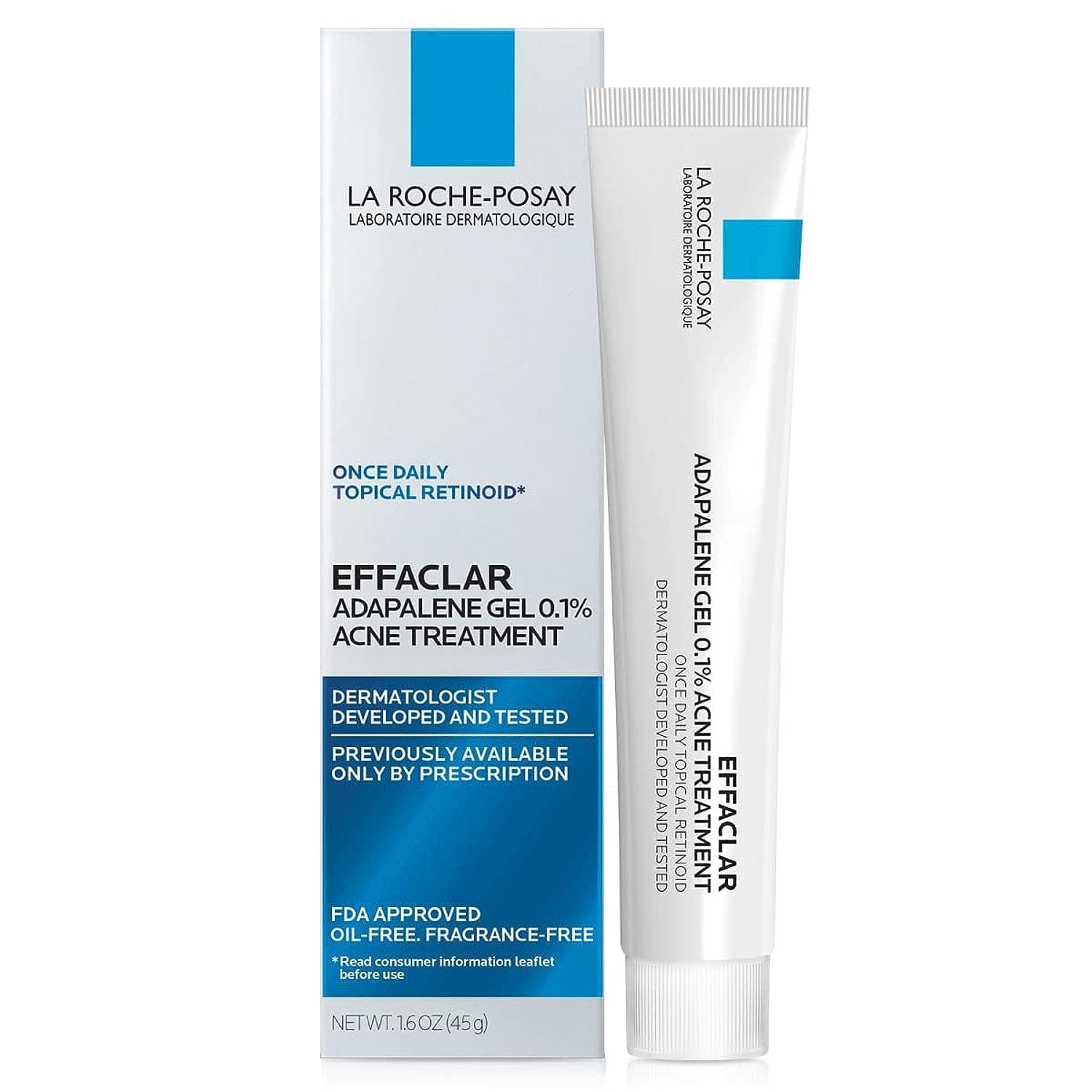
- On Velyqora: CeraVe Resurfacing Retinol Serum, which CeraVe makes for post-acne marks and pores and directs for nighttime use; CeraVe does not state its retinol strength. La Roche-Posay Effaclar Adapalene Gel 0.1% is an acne treatment. If breakouts are still causing new marks, a 2010 review notes that treating the underlying inflammation comes first.
CeraVe
CeraVe Resurfacing Retinol Face Serum with Niacinamide, Pore Minimizer, 1ozEvidence: Moderate for marks and uneven tone, limited for pores.
Azelaic acid: a gentler option with good evidence at prescription strength
- What it is: An acid used for acne, redness and dark marks. NBC Select reports that prescription versions come in 15% and 20%, and over-the-counter products go up to 10%.
- What the research shows: The AAD says azelaic acid fights acne and can also fade the dark spots a breakout leaves behind. A 2023 systematic review of 43 randomized trials found it worked better than an inactive cream for melasma, using 20%, with very few differences in common side effects compared with other treatments.
- Grades: Strong for prescription strengths in melasma. Moderate for 10% over-the-counter products, because the trials mostly used higher strengths.
- Cautions: Very sensitive skin may still sting or burn. Dermatologists quoted by NBC Select say over-the-counter results can take about three to four months and consider it an option during pregnancy and breastfeeding; confirm with your doctor.
- On Velyqora: The Ordinary Azelaic Acid Suspension 10%. The Ordinary says not to use it in the same routine as retinoids, direct acids or direct vitamin C.
The Ordinary
The Ordinary Azelaic Acid Suspension 10%, Formula for Uneven and Blemish-Prone SkinEvidence: Moderate.
Vitamin C: moderate evidence, best for skin that tolerates it
- What it is: L-ascorbic acid is the form with the most research. It is sold in serums at a range of strengths.
- What the research shows: A 2026 systematic review of 44 studies, 20 of them randomized trials, found that stable, low-pH vitamin C improved signs of sun aging and pigment problems, with stronger support for sun aging than for dark spots. An earlier review of seven trials with 139 volunteers found improvement in melasma but said long-term use may be needed.
- Grade: Moderate. Many studies were small, short or industry-sponsored, and the 2026 review found little data for darker skin.
- Cautions: Low-pH vitamin C can irritate. Vitamin C is not a sunscreen and adds no UVA or UVB protection, so wear it under sunscreen, not instead of it.
- On Velyqora: Timeless 20% Vitamin C + E Ferulic Acid Serum suits skin that already handles vitamin C well; Timeless itself offers a 10% version as the gentler choice. CeraVe Skin Brightening Vitamin C Serum (called Skin Renewing Vitamin C Serum on CeraVe's US site) contains 10% L-ascorbic acid. CeraVe says it suits all skin types, including sensitive, and directs morning use only. Its ingredient list includes denatured alcohol.
Niacinamide: moderate evidence, usually well tolerated
- What it is: A form of vitamin B3. It is not on the AAD's dark-spot list, though the AAD says it helps with shine and acne.
- What the research shows: In small trials, 5% niacinamide reduced dark spots compared with the same cream without it, after 4 weeks in one study and 12 weeks in another. In an 8-week split-face trial in 27 people with melasma, 44% saw good to excellent improvement with 4% niacinamide, compared with 55% with prescription-strength 4% hydroquinone, with fewer side effects on the niacinamide side (18% versus 29%).
- Grade: Moderate. The trials are small and short and tested 4% to 5%.
- Cautions: Dermatologists quoted by TODAY say higher strengths are more likely to cause tingling or redness and suggest starting at 2% to 5% if your skin is sensitive.
- On Velyqora: The Ordinary Niacinamide 10% + Zinc 1%. Its strength is above what the trials tested, and The Ordinary aims it at shine, pores and blemishes rather than dark spots. The Ordinary also says to keep its niacinamide and vitamin C in separate routines.
The Ordinary
The Ordinary Niacinamide 10% + Zinc 1%, Smoothing Serum for Blemish-Prone SkinEvidence: Moderate.

Tranexamic acid: promising for melasma, mixed results on the skin
- What it is: The AAD describes tranexamic acid as a melasma treatment dermatologists use either as a pill or applied to the skin. It also appears in some cosmetic serums.
- What the research shows: The AAD says it has been shown to reduce melasma patches when other treatments fail. A 2020 evidence review called the pill a promising treatment for moderate to severe melasma that keeps coming back. For skin-applied versions the picture is mixed: one 2024 analysis found them better than a placebo from week 8, while another analysis of 28 trials found no significant benefit over other treatments at 8 or 12 weeks.
- Grade: Moderate for the prescription pill. For tranexamic acid applied to the skin, the reviews disagree, so treat the results as mixed.
- Cautions: The AAD says to tell your dermatologist if you have ever had a blood clot. A 2017 review found side effects were minor, including reduced menstrual flow, stomach upset and skin irritation in a few people. Researchers note that more study is needed across different skin tones.
Kojic acid: on the AAD's list, but limited evidence
- What it is: An ingredient that, in lab studies, slows an enzyme skin uses to make pigment. The AAD lists it among over-the-counter dark-spot ingredients and among gentler melasma options a dermatologist may suggest.
- What the research shows: In an 80-person melasma trial, 1% kojic acid worked best when combined with 2% hydroquinone. Used alone it came third of four groups, and the trial had no inactive comparison cream.
- Grade: Limited.
- Cautions: The Cosmetic Ingredient Review panel considers kojic acid safe in cosmetics below 1%. Allergic skin reactions have been reported, including a case where the reaction itself left the skin darker. Patch-test first.
Alpha arbutin: popular, but little human research
- What it is: Arbutin is hydroquinone bonded to a sugar. Alpha arbutin is a form that blocks the pigment-making enzyme more strongly than natural arbutin in lab tests.
- What the research shows: A 2021 review of alpha arbutin reported lab findings and called for larger, high-quality human trials. We found no strong trials of alpha arbutin serums alone.
- Grade: Limited.
- Cautions: The European Union's scientific safety committee considers alpha arbutin safe up to 2% in face creams. A 2021 review notes that skin reactions are rare but advises caution because hydroquinone may form during use.
Hydroquinone: well studied, now prescription only in the US
- The evidence: A 2020 evidence review found hydroquinone, alone or in a prescription cream combined with tretinoin and a steroid, among the most effective and best-studied treatments for melasma. **Grade: Strong,** under a dermatologist's care.
- The rules changed in 2020: The FDA says that since the CARES Act, over-the-counter hydroquinone products are treated as new drugs that need FDA approval before sale, and unapproved products had to leave the market by September 23, 2020. In 2022 the FDA sent warning letters to 12 companies still selling them. The AAD confirms hydroquinone is no longer sold without a prescription.
- Why it needs a doctor: The FDA has received reports of rashes, facial swelling and ochronosis, a skin discoloration that may be permanent, from over-the-counter products. The only FDA-approved drug containing hydroquinone is Tri-Luma, a prescription cream for short-term use on moderate to severe melasma.
- Avoid imported "skin lightening" creams: FDA testing has found high levels of mercury or hydroquinone in some of these products, and mercury can damage the kidneys and nerves. The AAD warns that imported products may contain hidden steroids or mercury and advises choosing US-made or dermatologist-recommended products. Never put bleach on your skin.
Realistic timelines
- Post-acne marks: The AAD says a mark a few shades darker than your skin usually fades in 6 to 12 months once the cause is gone. Deeper color, often slate blue, gray or very dark brown, can take years.
- Melasma: The AAD says treatment results usually take 3 to 12 months, longer if melasma has been there a long time, and sun protection helps keep it from returning.
- Sun spots: Creams need applying once or twice a day for weeks or months, the AAD says. In-office procedures such as laser treatment are another option a dermatologist can discuss.
- In the trials: Tretinoin studies ran 10 months, the adapalene study 9 months, and the niacinamide studies 4 to 12 weeks. Expect months of steady use, not days.
How to layer without irritating your skin
Irritation is the main risk with fading ingredients, and on darker skin it can create new dark marks. A simple routine is easier to stick with:
- Morning: Gentle cleanser, vitamin C if you use it, moisturizer, then broad-spectrum sunscreen.
- Evening: One main fading active, such as a retinoid or azelaic acid, followed by moisturizer.
- Add one new product at a time, and give your skin time to settle before adding another, so you can tell what it is reacting to. Patch-test first.
- Keep certain pairs apart: The Ordinary says not to combine its azelaic acid with retinoids, direct acids or direct vitamin C, or its niacinamide with vitamin C. Using them at different times of day is one simple solution. Check each product's directions.
- Stop anything that burns or stings, the AAD advises, and choose gentle, fragrance-free products.
- Don't pick at breakouts. The AAD says picking or scratching can damage skin and cause scarring.
Pregnancy and breastfeeding
Pregnancy is a common melasma trigger, and the AAD says it may fade after the baby is born. Before using any fading product while pregnant or breastfeeding, talk to your doctor. The AAD says retinoids, including retinol, should not be used during pregnancy. Hydroquinone and the tranexamic acid pill are prescription treatments, so the decision belongs with your doctor. Dermatologists quoted by NBC Select consider azelaic acid an option, but confirm first. The FDA warns that pregnant people should avoid products that may contain mercury, such as unregulated skin lightening creams.
How Velyqora uses this
When we feature products for dark spots, we start with sunscreen and give more weight to ingredients with stronger evidence. We label limited or mixed evidence as such, and we never describe a product as lightening or whitening skin. We describe what it may do for the look of dark spots and uneven tone, on every skin tone.
This is general information to help you choose products, not medical advice. Skin responds differently from person to person. Patch-test new products, follow label directions, and talk to a dermatologist or doctor about skin conditions, prescription treatments, pregnancy or breastfeeding.
Products in this article
Paid links. As an Amazon Associate I earn from qualifying purchases.
CeraVe
CeraVe Resurfacing Retinol Face Serum with Niacinamide, Pore Minimizer, 1oz
A nighttime retinol serum with niacinamide and three ceramides, free of added fragrance, that CeraVe makes for post-acne marks and pores.
CeraVe
CeraVe Skin Brightening Vitamin C Serum for Face with Hyaluronic Acid
A 10% L-ascorbic acid serum from CeraVe with three ceramides and hyaluronic acid, made for morning use on all skin types.
La Roche-Posay
La Roche-Posay Effaclar Adapalene Gel 0.1% Acne Treatment
An over-the-counter retinoid gel with 0.1% adapalene, labeled for acne in adults and children 12 and older and used once a day.
The Ordinary
The Ordinary Azelaic Acid Suspension 10%, Formula for Uneven and Blemish-Prone Skin
A cream-like suspension with 10% azelaic acid that The Ordinary makes for blemish-prone skin, uneven tone, redness and rough texture.
The Ordinary
The Ordinary Niacinamide 10% + Zinc 1%, Smoothing Serum for Blemish-Prone Skin
A water-based serum with 10% niacinamide and zinc PCA that The Ordinary makes for visible shine, pores and blemish-prone skin.
Timeless Skin Care
Timeless 20% Vitamin C + E Ferulic Acid Serum, Antioxidant, 1 fl oz
A water-based serum with 20% L-ascorbic acid, vitamin E and ferulic acid that Timeless makes for brightness and a more even tone.
